


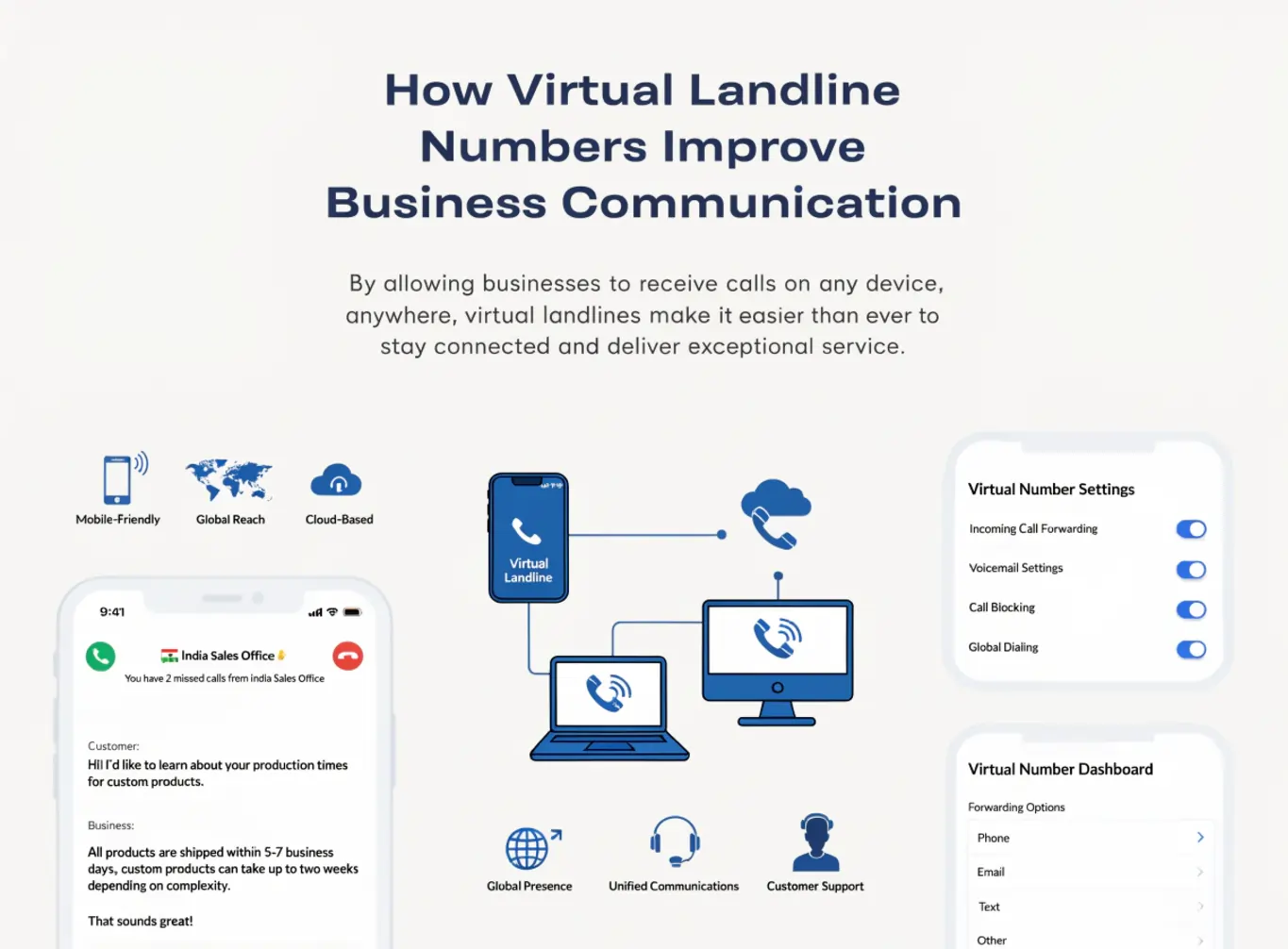
In today’s fast-paced digital world, businesses and individuals rely heavily on flexible and efficient communication systems. A virtual landline has emerged as a modern solution that replaces traditional phone lines with internet-based connectivity. It allows users to make and receive calls using smartphones, laptops, or VoIP devices without requiring physical wiring or location constraints. This technology supports remote work, global operations, and cost-effective communication. With increasing demand for mobility and scalability, virtual communication systems are becoming essential for maintaining professionalism and accessibility. A virtual landline enables seamless connectivity while helping businesses improve customer engagement and operational efficiency.
What Is a Virtual Landline and How It Works
A virtual landline is a cloud-powered phone service that uses internet connectivity instead of physical telephone lines. When someone calls a virtual number, the call is routed through VoIP (Voice over Internet Protocol) technology, which converts voice signals into digital data packets. These packets travel over the internet and are delivered to the recipient’s chosen device. This process happens in real time, ensuring clear and uninterrupted communication.
Users can configure where calls are received, whether on mobile apps, desktop software, or multiple devices simultaneously. The system is managed through an online dashboard, allowing easy control over call routing, forwarding, and voicemail settings. This flexibility makes it ideal for businesses that need mobility and reliability. Because everything operates through the cloud, users are not tied to a fixed location or hardware setup.
Key Features That Define Virtual Phone Systems
Virtual phone systems come with a range of advanced features designed to improve communication efficiency and user experience. One of the most important capabilities is intelligent call forwarding, which ensures calls are directed to the right person or device. Voicemail-to-email functionality allows users to receive voice messages directly in their inbox for quick response. Call recording is also commonly included, supporting training, compliance, and quality assurance.
Auto-attendant menus help businesses route incoming calls professionally, creating a structured communication flow. Additionally, analytics tools provide insights into call performance, helping organizations optimize their communication strategies. These features collectively enhance productivity and customer satisfaction. By using such tools, businesses can maintain a professional communication standard without investing heavily in traditional infrastructure.
Benefits of Using Virtual Communication Systems for Businesses
Adopting a virtual landline offers several advantages that can significantly improve business operations. One of the primary benefits is cost savings, as there is no need for physical infrastructure, installation, or maintenance. Businesses can also establish a professional presence by using local or international numbers, which helps build trust with customers. Accessibility is another major advantage, as users can handle calls from anywhere with an internet connection.
This supports remote teams and mobile workforces effectively. Scalability is also a key benefit, allowing businesses to add or remove users easily as they grow. Overall, virtual communication systems enhance efficiency while reducing operational complexity and expenses. They also enable businesses to respond faster to customer needs, improving overall service quality and satisfaction.
Virtual Phone Systems vs Traditional Landline Systems
Traditional landlines rely on physical wiring and are limited to fixed locations, which restricts flexibility. In contrast, a virtual landline operates entirely over the internet, allowing users to stay connected from anywhere. Traditional systems often require expensive hardware, installation, and ongoing maintenance, whereas virtual systems are more cost-efficient and easier to manage.
Feature-wise, virtual solutions provide advanced capabilities such as call routing, analytics, voicemail integration, and multi-device support. Traditional systems typically lack these modern functionalities. In terms of scalability, virtual systems allow businesses to expand quickly without infrastructure constraints. This makes them a more practical and future-ready option for modern communication needs. The ability to adapt quickly to changing business requirements is one of the strongest advantages of virtual systems.
Who Should Use Virtual Communication Services
Virtual communication systems are suitable for a wide range of users across different industries. Freelancers can use them to present a professional business identity without investing in office infrastructure. Small and medium-sized businesses benefit from improved communication management and reduced costs. Large enterprises often use virtual systems to manage global communication across multiple regions.
Remote teams rely on these systems to maintain seamless collaboration regardless of location. Customer support centers also use virtual setups to handle high volumes of calls efficiently. This versatility makes virtual communication ideal for anyone who values flexibility, scalability, and professional communication. It adapts well to different business sizes and operational models.
How to Set Up a Virtual Landline Step by Step
Setting up a virtual landline is a straightforward process that does not require technical expertise. The first step is to choose a reliable provider that meets your communication needs. Next, select a phone number based on your target audience or business location. After that, configure call routing settings to determine how incoming calls are handled.
Users can link the number to multiple devices, ensuring accessibility across platforms. Once the configuration is complete, the system is ready to use immediately. Most providers offer intuitive dashboards that simplify management and adjustments. This ease of setup allows businesses to adopt virtual communication systems quickly without disruption. It eliminates the complexity often associated with traditional telephony installations.
Best Practices for Optimizing Virtual Communication Systems
To maximize the effectiveness of a virtual landline, businesses should follow certain best practices. It is important to regularly update call routing settings to ensure calls reach the right team members. Monitoring call analytics can help identify performance trends and improve customer service strategies. Training staff on how to use the system effectively ensures smooth operations.
Businesses should also maintain strong internet connectivity to avoid disruptions in communication. Using professional voicemail greetings and automated responses can further enhance customer experience. By implementing these practices, organizations can fully leverage the capabilities of their virtual communication system. Consistent monitoring and optimization help maintain high performance over time.
Industry Statistics Supporting Virtual Communication Adoption
The adoption of virtual communication systems has increased significantly in recent years. A growing percentage of businesses are transitioning to VoIP-based solutions due to their flexibility and cost efficiency. Many organizations report substantial savings on communication expenses after switching from traditional systems. The rise of remote work has also contributed to the increased demand for virtual communication tools.
Market trends indicate continuous growth in cloud communication technologies across various industries. These statistics highlight the importance of adopting modern communication tools to remain competitive. As digital transformation accelerates, virtual systems are expected to become even more widely used. This shift reflects the global move toward cloud-based business infrastructure.
(FAQs)
1. What is a virtual landline?
A virtual landline is an internet-based phone number that allows users to make and receive calls without using a physical telephone line. It works through VoIP technology and can be accessed on smartphones, computers, or compatible devices.
2. How does a virtual communication system work?
It works by converting voice signals into digital data and transmitting them over the internet. Incoming calls are routed through a cloud system and delivered to your chosen device in real time.
3. Do I need special equipment to use it?
No special hardware is required. You only need a stable internet connection and a device such as a smartphone, laptop, or VoIP-enabled phone to use the service.
4. Can it be used for business purposes?
Yes, virtual communication systems are widely used by businesses to maintain a professional image, manage customer calls, and operate efficiently without needing a physical office line.
5. Is it cheaper than a traditional phone line?
In most cases, yes. Virtual systems reduce costs by eliminating installation fees, maintenance charges, and expensive hardware associated with traditional telephone systems.
6. Can I receive calls on multiple devices?
Yes, most services allow you to forward calls to multiple devices simultaneously or in a sequence, ensuring you never miss important calls.
7. Is it suitable for remote work?
Absolutely. These systems are ideal for remote teams and individuals because they allow communication from anywhere with an internet connection, supporting flexible and mobile working environments.
Conclusion:
A virtual landline has become an essential tool for modern communication, offering flexibility, cost efficiency, and advanced features that traditional phone systems cannot match. It enables businesses to operate from anywhere while maintaining a professional presence and reliable connectivity. With the rise of remote work and global business operations, adopting virtual communication solutions is no longer optional but necessary for growth and competitiveness. This technology simplifies call management, improves customer interactions, and supports scalability as businesses expand. By embracing a virtual landline, organizations can enhance efficiency, reduce costs, and stay aligned with the future of digital communication systems.
