









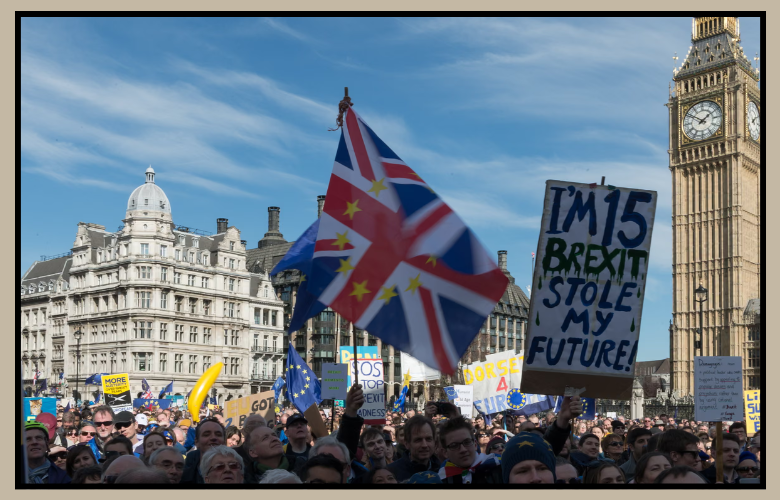
‘Best for Britain’ is a political campaign and research organization based in the UK that seeks to shape public policy and election outcomes as well as Britain’s relationship with Europe. While originally gaining prominence as an anti-Brexit organization, its current focus includes a range of issues such as trade, immigration, growth, democracy and international cooperation. It is not a political party nor does it run its own candidates, but rather engages in research, conducts opinion polls, formulates policy proposals and voter information tools. Increased interest has been shown in relation to its funding, political stance, leadership and its ties to George Soros.
What Is the Organisation and Why Does It Matter?
The organisation was founded in 2017 after the United Kingdom voted to leave the European Union. Its original purpose was to oppose Brexit and campaign for the closest possible relationship between Britain and Europe. During the Brexit negotiations, it supported public campaigns, parliamentary pressure and cooperation between politicians who believed leaving the EU could damage trade, investment and international influence. Once Brexit had taken place, the group did not end its activities. It changed from a mainly anti-Brexit campaign into a broader political research and advocacy network.
Its team includes policy researchers, data analysts, campaign strategists, economists, communications professionals and digital specialists. This structure allows it to connect detailed research with public campaigning. A report may be supported by opinion polling, promoted through media coverage and followed by a campaign asking people to contact their MPs. The organisation has no direct authority to pass laws, but it can influence the political environment in which government decisions are made. Its power comes from research, public communication, political relationships and supporter mobilisation.
The group follows an internationalist political outlook. It argues that Britain can protect its interests more effectively by cooperating with other countries on trade, science, security, health, climate policy and migration. European relations remain central to this approach, although its present campaigns are not limited to reversing Brexit. It now examines agreements that could reduce trade barriers, support exporters and create opportunities for young people. Some supporters may favour future EU membership, while others may only want closer economic cooperation.
Who Funds the Group and What Is the Soros Connection?
The question of who funds the campaign group is important because national polling, political advertising, economic research and staff salaries require significant resources. The organisation says that its activities are supported by people who agree with its objectives. Its income may include individual donations, regular monthly contributions and larger grants from philanthropists. These funds can pay for researchers, campaign websites, public events, constituency polling and digital communication. People considering a donation should examine current financial accounts and regulatory records rather than relying only on promotional statements.
Public discussion about its finances often focuses on George Soros. The Open Society Foundations, a philanthropic network founded by Soros, gave substantial financial support during the Brexit period. Published records indicate that grants were provided across 2017, 2018 and 2019, with the combined amount reaching approximately £2.7 million. The funding supported pro-European campaigning while the organisation was attempting to influence the national debate about leaving the EU. Therefore, the historical connection with Soros-linked funding is real and should be reported accurately.
However, historical grants do not automatically prove current ownership or permanent control. A major donor can help a campaign expand, but control would require evidence of direct authority over leadership, governance or daily decisions. Current fundraising information presents the organisation as supported by a broader group of donors. A balanced assessment should neither hide the size of the Open Society Foundations grants nor turn them into unsupported claims about secret control. Recent company accounts and Electoral Commission records provide a stronger basis for evaluating present funding.
Is It Left or Right, and Who Leads It?
The organisation describes itself as cross-party and does not officially identify as left-wing or right-wing. It has worked with figures from Labour, the Liberal Democrats, the Conservatives, the Greens and other political backgrounds. However, political independence from a party does not mean complete ideological neutrality. Its support for closer European integration, electoral reform, managed migration and international cooperation overlaps strongly with liberal, progressive and centre-left politics. Its election campaigns have also often benefited Labour or Liberal Democrat candidates in constituencies where they were considered most likely to defeat Conservatives.
The most accurate description is liberal-internationalist, with a position that often falls between the political centre and centre-left. Some of its policies may appeal to moderate centre-right voters, especially proposals that reduce trade barriers or help British businesses. However, its views on Europe, immigration and voting reform place it closer to progressive politics than to nationalist or socially conservative movements. Readers should therefore distinguish between formal party independence and political direction. It is not controlled by a political party, but it promotes a recognisable set of values.
Naomi Smith is the chief executive and one of the organisation’s main public representatives. Before entering political campaigning, she worked in finance, accounting and business advocacy. Her father was Trevor Smith, Baron Smith of Clifton, a political scientist, university leader and Liberal Democrat peer. He served as vice-chancellor of the University of Ulster and later became a member of the House of Lords. His background may have influenced her interest in politics and European cooperation, but it does not prove that he founded, funded or controlled the organisation.
Immigration, UK–EU Relations and Tactical Voting
The organisation generally supports managed legal migration when it benefits the economy, public services and industries facing labour shortages. Its published arguments state that overseas workers contribute to healthcare, social care, hospitality, education, agriculture and other important sectors. It also argues that political debate should distinguish between legal workers, international students, asylum seekers, refugees and temporary visitors. Its preferred approach is based on labour-market needs, clear visa rules and economic evidence rather than relying only on a general target for reducing migration.
One of its main proposals is a reciprocal youth mobility programme between the UK and European countries. Such a scheme could allow eligible young adults to live, study or work abroad for a limited period. Supporters believe it would restore opportunities that became harder to access after Brexit and help employers recruit temporary workers. Proposed versions have included age limits, time restrictions and numerical controls. This means the policy is not the same as unrestricted freedom of movement, although critics may still raise concerns about housing, wages and public services.
Tactical voting is another important part of its election work. Under first-past-the-post, the candidate with the most votes wins the constituency, even when most local voters supported other candidates. A tactical voter may therefore support a candidate who is not their first choice to prevent another party from winning. The organisation uses polling, previous election results and constituency modelling to recommend candidates. Such advice may be useful in marginal seats, but it cannot guarantee an election result because turnout, local campaigns and polling errors can change the final outcome.
Benefits, Practical Uses, Jobs and Contact Information
The organisation provides information and participation opportunities for several audiences. Voters can use constituency research to understand local election contests, while businesses can read reports about customs procedures, visas and regulatory barriers. Journalists may use its polling to examine changes in public opinion, and policymakers can review its recommendations on trade, migration and democratic reform. Students and researchers may also study its reports as examples of political advocacy. These materials can be useful, but they should be compared with government data and credible alternative viewpoints.
Its main benefits and limitations include:
- It explains complex political subjects in accessible language.
- It commissions national and constituency-level polling.
- It gives businesses a platform to discuss trade problems.
- It creates tools that help supporters contact MPs.
- It develops detailed proposals rather than relying only on slogans.
- Its research reflects a clear pro-European viewpoint.
- Its economic forecasts depend on assumptions.
- Its tactical voting advice may become inaccurate.
- Some campaign impact claims are difficult to verify independently.
Frequently Asked Questions
What is Best for Britain?
It is a UK political campaigning and research organisation focused on UK–EU relations, trade, immigration, electoral reform and tactical voting. It is not a political party and does not stand candidates in elections.
Who funds the organisation?
Its work is supported by individual donors, regular contributors and larger financial supporters. Historical records also confirm substantial grants from the Open Society Foundations during the Brexit campaign period.
Is the organisation left-wing or right-wing?
It describes itself as cross-party, but its policies are generally liberal, internationalist and centre-left. Its support for European cooperation, migration and electoral reform often aligns with progressive political positions.
What is the connection with George Soros?
The Open Society Foundations, founded by George Soros, provided significant funding during the Brexit campaign. However, historical grants do not prove that Soros currently owns, controls or solely funds the organisation.
What is its position on immigration?
It supports managed legal migration based on economic needs, labour shortages and clear visa rules. It also supports temporary youth mobility opportunities between the UK and European countries.
Conclusion
In conclusion, the group has evolved from a purely anti-Brexit campaigning organization into a political research and advocacy group with interests beyond Brexit. Some of these include trading, migration, election reforms, mobility of youth, growth of the economy and tactical voting. Readers will no doubt appreciate the polls, policy recommendations and the capacity to translate research into political action. Nevertheless, it must be made known that the group has distinctively pro-European and liberal-internationalist ideology, and therefore, its reports cannot be considered politically impartial. The historical sponsorship of the Open Society Foundations is important, but cannot be used as evidence of any control in the present day.


