









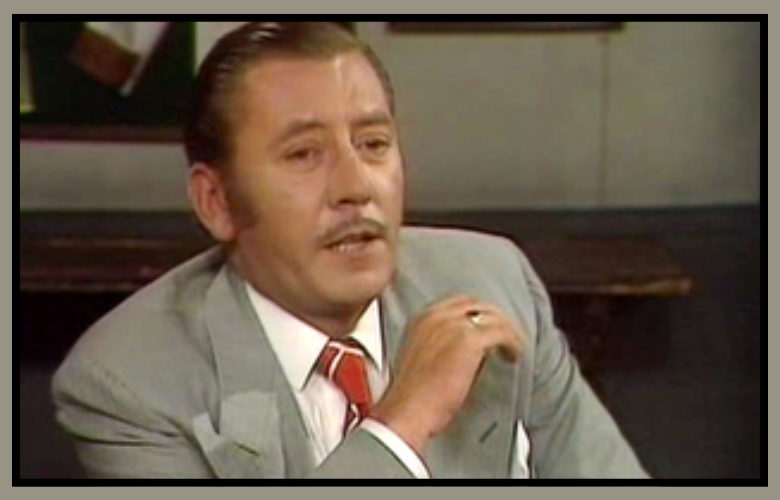
James Beck was a great English actor who became famous for his role as Private Joe Walker in the celebrated BBC situation comedy “Dad’s Army.” Born in London in 1929, Beck gained interest in acting following his completion of national service and established a flourishing career as an actor on stage and screen. It was his attractive character, sense of humor, and portrayal of the confident and witty Walker that endeared him to many people. Unfortunately, Beck had his career ended early in 1973 when he died aged only 44 years old. However, Beck still stands out as a notable actor in British entertainment history due to his exceptional contribution to TV comedy.
Early Life, Education, Family, Wife and Children
Stanley James Carroll Beck was born on 21 February 1929 in Islington, North London. Growing up in the capital exposed him to London speech, working-class humour and confident local personalities. These influences later became visible in his portrayal of the streetwise Private Joe Walker. Beck attended Popham Road Primary School before studying at Saint Martin’s School of Art. His art education may have improved his ability to observe facial expressions, clothing, posture and physical behaviour. These visual skills later helped him communicate humour through small movements and controlled reactions.
After completing his education, Beck undertook national service in the British Army. He reportedly worked as a physical training instructor and gained direct experience of military discipline, routines and relationships between ranks. This knowledge became useful when he later joined a television comedy centred on a fictional Home Guard platoon. Following his military service, he briefly worked as a commercial artist but found the profession creatively limiting. Acting offered him greater variety and the opportunity to explore different personalities. He therefore entered regional and repertory theatre, where he gradually built his professional experience.
His wife was Kay Beck, who remained largely outside the entertainment industry and avoided publicity. They were married until his death in August 1973, although few reliable details about their private relationship were published. Some biographies state that he was survived by three children named Christopher, Diana and David. Other accounts describe them as Kay’s children from an earlier marriage, meaning they may have been Beck’s stepchildren. Because the surviving information is not completely consistent, uncertain family details should not be presented as confirmed facts. What is clear is that Beck kept his family life separate from his growing television fame.
Acting Training and Rise to Fame in Dad’s Army
Repertory theatre played a major role in shaping Beck’s professional ability. Actors working in this system often rehearsed one production while appearing in another, which demanded concentration and discipline. They had to learn dialogue quickly, understand unfamiliar characters and adapt to different directors and audiences. This experience strengthened Beck’s voice control, movement and ability to react naturally to other performers. It also taught him to remain involved in a scene while another actor was speaking. These skills later made his television performances appear relaxed and spontaneous.
During the early 1960s, Beck began receiving supporting roles in British television programmes. His early credits included Dixon of Dock Green, Z Cars, Dr Finlay’s Casebook, Comedy Playhouse and Coronation Street. He appeared several times in Coronation Street as Police Sergeant Bowden. These roles helped him adjust from broad stage performance to the more controlled style required by television cameras. A camera could capture a slight smile or raised eyebrow that might be difficult to see in a theatre. Beck learned to use these small expressions to make his characters believable.
His major breakthrough came in 1968 when he was cast as Private Joe Walker in Dad’s Army. The sitcom followed a Home Guard platoon in the fictional seaside town of Walmington-on-Sea during the Second World War. Walker was younger, more practical and more streetwise than most members of the group. He was commonly described as a spiv who obtained scarce goods through unofficial or questionable contacts. Wartime shortages made his connections valuable because he could find food, clothing, petrol and equipment. Beck gave Walker warmth and loyalty, preventing him from becoming a simple dishonest stereotype.
Private Walker’s Character and James Beck’s Acting Style
Walker’s relationship with Captain Mainwaring created some of the programme’s strongest comedy. Mainwaring believed deeply in authority, rank and official procedures, while Walker trusted practical experience and personal contacts. Walker rarely challenged his commanding officer through open rebellion or aggressive behaviour. Instead, he used relaxed body language, casual comments and knowing facial expressions. This allowed him to reveal the weaknesses in Mainwaring’s plans without becoming unlikeable. Audiences enjoyed the contrast because Walker often expressed what other platoon members were unwilling to say.
Beck’s performance also benefited from his chemistry with the wider cast. Arthur Lowe gave Captain Mainwaring authority and comic self-importance, while John Le Mesurier made Sergeant Wilson calm and understated. Clive Dunn brought physical energy to Corporal Jones, and John Laurie gave Private Frazer a gloomy intensity. Arnold Ridley made Private Godfrey gentle, while Ian Lavender played the inexperienced Private Pike. Walker occupied an important position between these different personalities. He was younger than most of the platoon but more independent and worldly than Pike.
One of the strongest qualities of Beck’s acting was its naturalness. He appeared to speak rather than recite written dialogue, making his performances feel spontaneous. He understood when to pause, when to interrupt and how long to hold an expression. Beck did not place unnecessary emphasis on every joke or clearly signal that the audience should laugh. Instead, he allowed humour to develop from Walker’s personality and relationships. His quiet confidence frequently created a strong contrast with the panic or self-importance of the other characters.
James Beck Movies and TV Shows
The range of His movies and TV shows proves that he was more than an actor with one successful character. His career included police dramas, medical programmes, literary adaptations, situation comedies, radio productions and feature films. Some roles were small, but they helped him develop the flexibility needed to perform both serious and humorous material. The popularity of Private Walker later overshadowed much of his earlier work. As a result, many viewers incorrectly assume that Beck always played similar personalities. His notable acting credits included:
- Dixon of Dock Green
- Deadline Midnight
- Dr Finlay’s Casebook
- Z Cars
- Comedy Playhouse
- Taxi!
- Coronation Street
- Gideon’s Way
- All Gas and Gaiters
- The Blue Carbuncle
- Not in Front of the Children
- Dad’s Army
- Two in Clover
- Doctor in the House
- The Fenn Street Gang
- Scoop
- My Wife Next Door
- Romany Jones
- Groupie Girl
- Dad’s Army, the feature film
- Love Thy Neighbour
His film career was smaller than his television work, but it contained several interesting appearances. He played Brian in Groupie Girl, which was released in 1970. Beck returned as Private Walker in the 1971 feature-film version of Dad’s Army. The cinema production brought the familiar cast together in a longer story created for regular fans and new viewers. He later appeared as Cyril in the 1973 film version of Love Thy Neighbour. Beck also filmed scenes for Carry On Loving, although his material was removed from the completed release.
His most important role outside Dad’s Army was Bert Jones in the ITV sitcom Romany Jones. The programme followed families living on a caravan site and explored financial, domestic and community problems. Bert was one of the central characters, giving Beck greater responsibility for carrying complete storylines. Like Walker, Bert could be opportunistic and willing to use unconventional solutions. However, he was also a husband whose decisions affected his wife and neighbours. The role proved that Beck could lead a sitcom rather than remain only a supporting performer.
Benefits, Lessons and Lasting Appeal
Beck’s performances offer practical benefits for acting students because they show that acting continues when another performer is speaking. In many scenes, his expression reveals Walker’s opinion before the character delivers a line. A small smile may suggest that he has identified a profitable opportunity. A raised eyebrow may show that he doubts one of Captain Mainwaring’s plans. Students can watch a scene without sound and focus on Beck’s expressions, posture and eye movements. Replaying the scene with dialogue then shows how his physical reactions support the spoken words.
Comedy writers can also learn from the construction of Private Walker. The character did not exist only to deliver amusing lines or make questionable business deals. His contacts could provide difficult-to-find goods, solve practical problems and create new complications. This meant that Walker could generate storylines while also producing humour. Strong ensemble characters usually offer something that no other member of the group can provide. Walker’s resourcefulness made him structurally important to the programme as well as entertaining.
The character remained likeable because he contained believable contradictions. Walker could be dishonest but loyal, selfish but helpful, disrespectful but affectionate. He wanted to make money from wartime shortages, yet he regularly used his contacts to support the platoon. These qualities prevented him from becoming either a perfect hero or an unpleasant villain. Audiences could question his methods while continuing to enjoy his confidence and humour. His character also offered a humorous picture of unofficial trading and practical problem-solving during wartime shortages.
James Beck Cause of Death, Final Illness and Funeral
The story of how he died remains one of the saddest chapters in British comedy history. During 1973, he was working on the sixth television series of Dad’s Army, its radio adaptation and the ITV sitcom Romany Jones. His career was continuing to develop, and he appeared likely to receive further leading roles. On 13 July 1973, he recorded episodes of the Dad’s Army radio series with other cast members. The following day, while attending a school fête, he suddenly became seriously unwell. His condition worsened, and he was admitted to Queen Mary’s Hospital in Roehampton.
His cause of death is generally recorded as pancreatitis accompanied by kidney and heart failure. Pancreatitis is a serious inflammation of the pancreas that can cause dangerous complications throughout the body. Beck remained in hospital for approximately three weeks, but his health did not improve. He died on 6 August 1973 at the age of 44. His sudden death shocked his family, colleagues and viewers because he had been working actively shortly before becoming ill. It was not the end of a long and publicly known illness.
His funeral was kept private, and complete details about the ceremony are not widely available. Records indicate that he was cremated at Putney Vale Cemetery in South-West London. His death created difficulties for the producers of Dad’s Army because some episodes had already been recorded. Private Walker continued to appear in material broadcast after Beck’s death, while a later episode explained his absence through a business trip. Beck’s death also affected Romany Jones, where he had been one of the leading performers. His loss ended a career that appeared to have considerable room for further growth.
James Beck Basketball, FAQs and Conclusion
The phrase his basketball refers to a different person and should not be confused with the English actor. An American basketball player with the same name was born in Grand Rapids, Michigan, in 1999. He played college basketball in the United States and has no known connection to the Dad’s Army performer. Search engines sometimes combine information about people who share identical names. This is why basketball profiles or statistics may appear beside information about the British actor. Keeping the two individuals separate prevents inaccurate biographical information.
Who was his wife? His wife was Kay Beck, who generally avoided public attention. Did he have children? Some accounts mention Christopher, Diana and David, although they may have been Kay’s children from an earlier marriage. What was his cause of death? He died after suffering from pancreatitis together with kidney and heart failure. When did he die? He died on 6 August 1973 at the age of 44. Where was his funeral held? Full ceremony details are limited, but he was cremated at Putney Vale Cemetery in London.
This deserves to be remembered as more than the performer who played a popular television trader. His theatre training, dramatic appearances, films, radio work and leading role in Romany Jones reveal an adaptable and experienced actor. Private Walker became his greatest achievement because Beck combined confidence, charm, dishonesty and loyalty without making the character unlikeable. Although his career ended before its full potential could be realised, his performances remain entertaining and educational. Creating a character who remains recognisable more than half a century later was a major achievement. His contribution to British television comedy remains meaningful, influential and unforgettable.
Frequently Asked Questions
Who was James Beck famous for playing?
James Beck was an English actor best known for playing Private Joe Walker in the BBC sitcom Dad’s Army. His confident personality, humour, and memorable performance made the character popular among audiences.
When did he die?
He died on 6 August 1973 at the age of 44. His sudden passing shocked his family, friends, and the cast members of Dad’s Army.
What was his cause of death?
His death was caused by complications related to pancreatitis, heart failure, and renal failure. He became seriously ill and passed away in hospital after his condition worsened.
Who was his wife?
He was married to Kay Beck. The couple kept their personal life private, and limited information about their family and relationship is available publicly.
Did he serve in the military?
Yes, he completed national service in the British Army before becoming an actor. His military background helped him connect with the wartime setting of Dad’s Army.
Conclusion
While James Beck may not have acted for a long time, his influence on British TV cannot be forgotten. His performance as Private Joe Walker in “Dad’s Army” highlighted his excellent sense of humor, which made him contribute to the show becoming one of the best sitcoms in the history of British television. In addition to his well-known performance, Beck was a hardworking actor who devoted himself to theater and television. His unexpected death in 1973 was an enormous loss for his family members, coworkers, and admirers. Years later, his talent, humor, and unique performances are still appreciated by audiences, which confirms that he has secured his place in the world of entertainment forever.


