


Winter trips are hard on the eyes. Cold air, wind, dry heating, long journeys and bright, low sun on snow or wet roads can leave eyes feeling gritty, tired or sore. If you wear contact lenses or glasses, it also pays to think about spares and backups, because a lost lens or a sore eye can interrupt a trip.
This guide covers what to do before you go, what to pack for your eyes, and how to keep them comfortable on the journey and at your destination, so you can enjoy the trip rather than manage your eyes.
Plan Before You Go
The most useful preparation happens before you leave. Check that your prescription is current and that your glasses or lenses still suit you. An out-of-date prescription can make long journeys, night driving and screen time feel harder than they should.
RNIB explains why looking after your eyes includes regular eye tests, because some conditions have no early symptoms. Most adults are advised to have a test at least every two years, and booking one a few weeks before a trip leaves time to order new glasses or lenses if you need them.
It also helps to work out how many lenses you will need. Take more than your trip length requires, in case of delays, a torn lens or a lost case.
What Winter Conditions Do to Your Eyes
Winter air is often cold and dry, and heated rooms, cars and aircraft cabins can dry it further. Wind can make your eyes water, and bright sun on snow, ice or wet roads can cause strong glare. The Met Office notes that winter brings shorter days and colder, often unsettled weather, so you may find yourself travelling in the dark more often than in summer.
Pack Your Lenses and Spares
If you wear contact lenses, they deserve a proper place on your packing list. Pack:
- Enough lenses for the whole trip, plus a spare week if you can
- Your lens case and fresh solution, if you wear reusable lenses
- A copy of your prescription, in case you need to replace lenses abroad
- Your glasses, so you have a full backup
Many wearers use monthly lenses, which are replaced after a month and need a case and solution. For example, CooperVision Biofinity lenses are a monthly silicone hydrogel range, and some people look at the range online when planning ahead for a trip: you can shop Biofinity lenses online from UK retailers that check your prescription before dispatch. The range includes Biofinity toric contact lenses for astigmatism and Biofinity multifocal contact lenses for the near-vision changes that come with age. A few points are worth knowing:
- Biofinity toric lenses are designed for people with astigmatism, and they must be fitted with both power and axis.
- Biofinity multifocal lenses combine different zones for near, middle and distance vision in one lens.
- Both need a proper fitting and a valid prescription, and availability depends on your parameters.
Whether any of these suits you is something for your optician to decide. If you are thinking of switching lenses, do it well before a trip, not the week you leave. The British Contact Lens Association is the professional body for contact lens practitioners, and its website is a useful starting point if you want to know more about lenses and lens care.
Pack Your Glasses and Sunglasses
Glasses are your best backup, and many people swap into them on long flights, when cabin air dries out lenses, or at the end of a long day. If your glasses are old or scratched, consider whether they need updating before you travel.
Sunglasses matter in winter too. Low sun, snow and wet roads reflect a lot of light. Choose a pair that blocks UV light and carries a recognised safety mark, and consider wraparound frames for windy or snowy conditions. If you are skiing, snowboarding or walking at altitude, you may need goggles or specialist eyewear, so check what suits your activity.
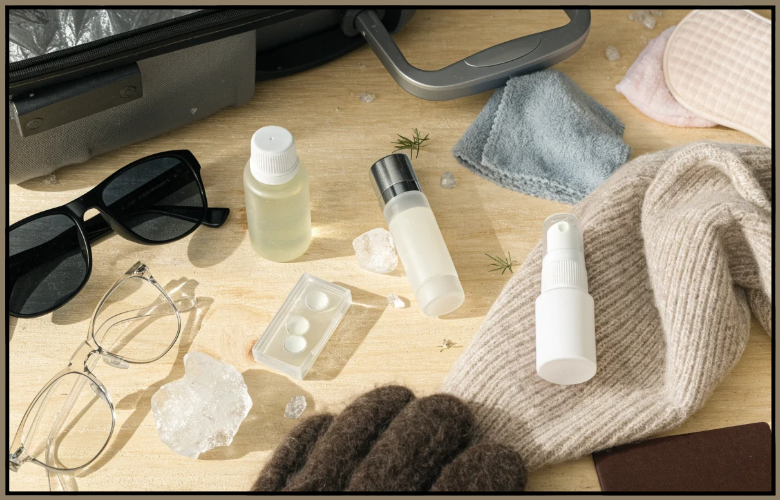
A Small Eye Comfort Kit
A small kit solves most problems before they begin:
- Rewetting drops, if your optician says they suit your lenses
- Clean tissues and hand sanitiser, for use before touching your eyes
- A small mirror, if you wear lenses, so you can check them easily
- Lip and face balm, since cold and wind dry everything, not just eyes
- A travel-size solution within airport liquid rules
For flights, check the current liquid rules for hand luggage. There is a usual 100ml limit per container, though some medical items may be treated differently, so check airline and airport guidance in advance.
On the Journey
Planes, trains and cars all dry the air. A few habits make a difference:
- Take your lenses out for long flights if your eyes feel dry, and switch to glasses.
- Blink fully and often, particularly when reading or at a screen.
- Take regular breaks on long drives, and keep your windscreen clean.
- Stay hydrated, since dry cabin air makes it easy to get dehydrated.
- Avoid rubbing your eyes, especially after handling luggage or public surfaces.
If you drive, keep a spare pair of glasses in the car, and wear the correction you need every time.
Don’t Panic About Red Eyes
Cold air, wind, dry heating and late nights can all leave eyes looking red. It is easy to jump to conclusions about the cause, but redness is often misunderstood. It helps to know the red eyes myth before you assume that one thing is to blame, since it can have several causes.
If your eyes are red and uncomfortable, take out your lenses and wear your glasses. If redness is painful, lasts more than a day or two, or comes with blurred vision, light sensitivity or discharge, speak to an optician or seek medical advice, particularly if you wear contact lenses.
A Quick Packing Checklist
- Enough lenses for the trip, plus spares
- Glasses, as a backup
- Case, solution and drops, within liquid rules
- Prescription details
- Sunglasses with UV protection
- Tissues and hand sanitiser
- Water bottle
Frequently Asked Questions
Should I wear contact lenses on a long flight?
Many people do, but cabin air is dry. If your eyes feel uncomfortable, take your lenses out and switch to glasses.
What if I lose a lens or run out while I’m away?
Keep your glasses and a copy of your prescription. An optician or pharmacist abroad may be able to help, but having spares avoids the problem.
Do I need sunglasses in winter?
On bright days, yes. Low sun, snow and wet roads can cause strong glare.
Can I wear contact lenses for skiing or snow sports?
Many people do, with goggles or protective eyewear. Ask your optician if you are unsure.
Travel With Comfortable Eyes
A little planning keeps your eyes comfortable on a winter trip: check your prescription, pack spares and your glasses, protect your eyes from glare and dry air, and carry a small comfort kit. Look after your lenses, take breaks when your eyes feel tired, and book an eye test if anything feels different. Then you can spend your trip enjoying the view.
