


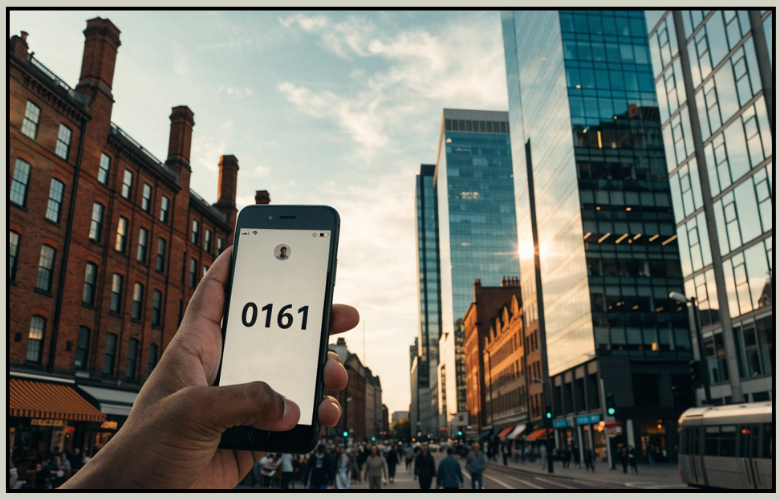
For a growing Manchester business, a local 0161 number offers a consistent way for customers to get in touch while allowing the team to work across different locations. The prefix is associated with Manchester, but a virtual service means calls can be managed through a mobile phone or laptop. That combination can suit businesses whose working day extends beyond a single office.
The need often becomes apparent during an ordinary working week. A business owner is visiting a customer when another enquiry arrives. A colleague is available to help, but the caller only has the owner’s personal mobile number. What began as a convenient arrangement for a sole trader becomes harder to manage once several people share responsibility for customers.
A dedicated business number creates a clearer starting point. It gives enquiries, appointment requests and returning customers one published route into the company. The same contact details can appear on the website, quotations, invoices and business cards, helping customers know which number to use without having to identify the right employee first.
For companies considering an 0161 phone number, the decision should therefore go beyond choosing a familiar area code. The more useful question is how that number will support everyday service: who answers, what happens when they are busy and how quickly someone follows up. A recognisable contact point works best when the process behind it is dependable.
What a Manchester Number Can—and Cannot—Do for Customer Confidence
A local area code gives callers a geographical reference. For someone looking for a Manchester accountant, property maintenance company or design agency, that reference may help them understand which market a business serves. It works alongside other information, including the company’s service area, customer reviews, project examples and clearly explained services.
However, a telephone number does not establish the quality of a business. Customers still need to know whether the team understands their request, can deliver the work and will communicate clearly. A prompt answer followed by an accurate quotation is more persuasive than an area code unsupported by reliable service.
Location information should also remain transparent. Businesses using a Manchester number should explain where they operate and whether they offer visits, remote appointments or meetings at a stated address. A regional telephone number should complement those details rather than leave customers to assume that the business has a particular office or shopfront.
Consistency matters after the first enquiry as well. If a customer calls to discuss a quotation, rearrange an appointment or ask about completed work, they should be able to use the same contact details. Keeping one business number across the customer relationship reduces the need to search old messages for an individual employee’s mobile number.
How a Virtual Phone Number Fits a Growing Team
A virtual number is a telephone number managed through a service rather than tied to one physical telephone line. Rinkel’s offering allows users to make and receive business calls through a mobile phone or laptop, with call forwarding and business voicemail among the available features. Other functions, including business hours and call transfers, depend on the selected plan.
Businesses researching a virtual phone number uk should begin by mapping a typical enquiry. Consider who needs to answer it, what information they need and whether the caller might require help from another colleague. This turns a broad search for telephone features into a practical assessment of how the business actually works.
For example, a small maintenance firm might assign incoming enquiries to an administrator while tradespeople are on site. A consultancy could arrange cover when the person handling new business is in a client meeting. These are different working patterns, so the most suitable setup depends on responsibility and availability rather than company size alone.
A separate business number can also help maintain boundaries around personal contact details. Employees can give customers the company’s published number instead of distributing private mobile numbers across proposals and messages. The team should then agree how calls are handled outside working hours, what the voicemail says and who checks messages when normal service resumes.
Choosing a Local Number That Supports Long-Term Growth
Before choosing a provider, identify the problems the new arrangement needs to solve. Missed enquiries, inconsistent voicemail messages and calls reaching the wrong colleague each point to a different requirement. A sole trader may need simple call handling, while a team sharing customer support may need a more coordinated process. Buying around those needs keeps the decision focused.
Compare the total cost of the service rather than the headline subscription alone. Check user fees, call allowances, forwarding charges, additional numbers and any limits attached to included calls. Ask how the cost changes when another colleague joins. If the business already has a well-known number, confirm whether it can be transferred and what the changeover involves before ending the existing service.
Test the proposed setup against realistic situations. Make an incoming call while the usual recipient is unavailable, leave a voicemail and check how the team receives it. Try an outgoing call and confirm which number appears to the customer. These checks help establish whether the service supports daily work and whether employees understand how to use it.
A local 0161 number can give a growing Manchester business a stable point of contact as its team, premises and working patterns change. Its lasting value comes from the service organised around it: clear ownership of enquiries, sensible cover arrangements and reliable follow-up. When those elements work together, customers have an easier way to reach the business—and the business has a more manageable way to respond.
