


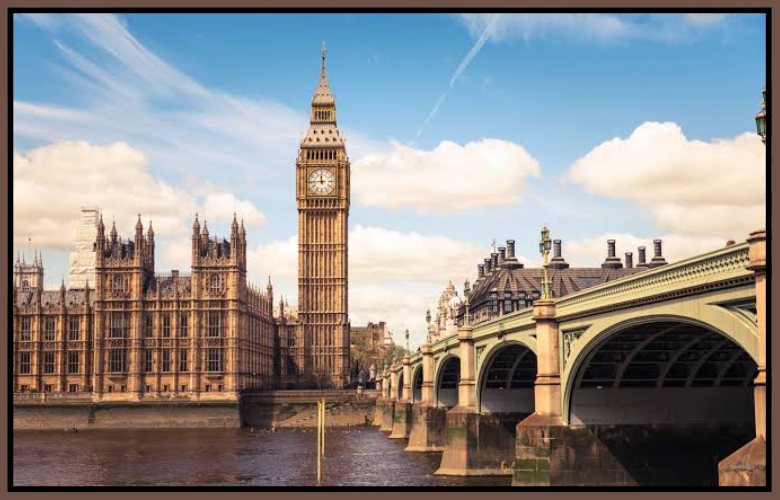
London Big Ben is one of the most recognisable landmarks in the United Kingdom and an important symbol of the capital city. Standing beside the Houses of Parliament on the River Thames, it attracts millions of visitors who come to admire its historic architecture and famous clock. Although many people call the entire tower Big Ben, the name technically refers to the Great Bell inside the Elizabeth Tower. Completed in 1859, the landmark has played an important part in London’s history and remains a popular feature of photographs, films and television programmes. Today, visitors can enjoy impressive views of the tower from Westminster Bridge, Parliament Square and the South Bank while exploring the surrounding historic area.
The History of Big Ben: From the 1834 Fire to 1859
The story began with a major fire in 1834. Flames destroyed most of the old Palace of Westminster. As a result, Parliament needed a new building. Charles Barry won the design competition for the new palace. Augustus Welby Pugin also helped create its Gothic Revival style. Work on the new Palace started in 1840. Construction of the future clock tower began in 1843.
Parliament wanted a clock that could show accurate time. Edmund Beckett Denison designed the clock system. Clockmaker Edward John Dent then built it. The clock mechanism reached completion in 1854. However, the bell created serious problems. Workers cast the first Great Bell in 1856. It cracked during tests the following year. The makers then broke up the damaged bell and used its metal again.
George Mears cast the second Great Bell in 1858. The clock started keeping time on 31 May 1859. Soon after, the Great Bell struck its first hour on 11 July. Sadly, the bell developed another crack. Engineers found a better answer than replacing it. They turned the bell by 90 degrees and used a lighter hammer. Therefore, the hammer no longer hit the damaged part. The bell returned to service in 1863.
Big Ben Bell, Big Ben Clock and Big Ben Tower London
Many people think Big Ben is the name of the entire tower. That idea is common, but it is not technically correct. Big Ben refers to the Great Bell inside the tower. The clock mechanism has another name, the Great Clock. Meanwhile, the tower itself is called Elizabeth Tower. Even so, people around the world still use Big Ben when they talk about this famous sight.
The Great Bell weighs about 13.7 tonnes. Its hammer weighs around 200 kilograms. Four smaller bells also sit inside the belfry. Together, these bells create the well-known Westminster chimes. The Great Clock has four large faces. Each face measures about seven metres across. In addition, each face contains hundreds of pieces of opal glass.
Elizabeth Tower reaches about 96.3 metres into the London sky. It has 11 floors and hundreds of steps. There are 281 steps to the clock faces and 334 steps to the belfry. The clock mechanism weighs about five tonnes. Its pendulum measures 4.4 metres long and weighs about 310 kilograms. These figures show how large and complex this Victorian clock project really was.
Why Is It Called Big Ben?
The question why it is called Big Ben has no certain answer. The most popular story connects the name with Sir Benjamin Hall. He served as First Commissioner of Works during the later part of the project. According to the common story, people gave him the nickname Big Ben because he was a large man. Another theory links the name with boxer Benjamin Caunt, who also had the nickname Big Ben.
For many years, people called the building the Clock Tower. Parliament changed its official name to Elizabeth Tower in 2012. The change marked Queen Elizabeth II’s Diamond Jubilee. As a result, the name now clearly separates the tower from the Great Bell. Still, the old name remains much more familiar to tourists. It also remains one of the most common terms used when people search for information about the landmark.
The famous name became even stronger through its sound. The clock bells became part of daily life for many people. BBC Radio first broadcast the chimes across Britain on New Year’s Eve in 1923. During the Second World War, the clock faces stayed dark during the blackout. The chimes, however, continued to represent a sense of time and stability. Over the years, the sound became closely linked with Britain.
Big Ben Photos, Architecture and Best Views
The tower offers many chances for memorable photographs. Westminster Bridge gives one of the most popular views. From there, photographers can capture the tower, River Thames and Palace of Westminster together. The South Bank also gives a wide view across the river. Furthermore, evening light can make the clock faces stand out against the darker sky. Morning visits can offer softer light and fewer people.
The design is another reason the tower attracts so much attention. Charles Barry created the wider palace in the Gothic Revival style. Pugin helped shape its rich details and decoration. Tall stone sections give the tower its strong vertical look. Large clock faces sit high above the busy streets. Workers also built the tower from the inside out. Steam-powered equipment helped move heavy materials during the work.
Here are some useful places and times to consider when taking pictures:
- Westminster Bridge: A classic view with the tower and River Thames.
- South Bank: A good choice for wide skyline photographs.
- Parliament Square: Useful for closer views of the architecture.
- Morning: Often provides softer light and fewer crowds.
- Evening: Great for pictures of the illuminated clock faces.
The area around the tower is also worth exploring. Visitors can walk through Westminster and see other famous sights nearby. Westminster Abbey and the River Thames are easy to add to the same trip. In addition, the Palace of Westminster gives the area a strong historic setting. Therefore, visitors can enjoy much more than the tower alone.
Conservation, Interesting Facts and Visitor Experience
Historic buildings need regular care. Elizabeth Tower has received several repairs during its long life. The largest recent conservation project began in 2017. Specialists worked on the stone, clock, metal parts and other areas. They also used traditional skills to protect important historic features. The work finished in 2022. After that, the Great Clock returned to regular service.
The tower contains many interesting facts. Each clock face has 324 pieces of opal glass. The Great Bell weighs about 13.7 tonnes. Its pendulum is 4.4 metres long. Engineers can use old pennies to make small changes to the clock’s speed. One penny can change the rate by about two-fifths of a second over 24 hours. At the top, the Ayrton Light shines when Parliament is sitting.
A visit also requires some planning. Elizabeth Tower forms part of the working parliamentary estate. Therefore, visitors cannot treat it like an ordinary museum. Tour rules and access times can change. Anyone hoping to enter should check the latest visitor details before travelling. Even without an interior tour, the outside view remains impressive. The surrounding streets also offer many places to walk, explore and take photographs.
- Also Read. Fionn Whitehead Biography Career and Movies
Frequently Asked Questions
What is Big Ben?
Big Ben is the nickname of the Great Bell inside the Elizabeth Tower at the Houses of Parliament. However, the name is commonly used to describe the entire clock tower.
Where is Big Ben located?
It is located beside the Palace of Westminster in central London, overlooking the River Thames and close to Westminster Bridge.
When was Big Ben completed?
The Elizabeth Tower and its clock were completed in 1859. The landmark has since become one of London’s most recognisable sights.
Can visitors go inside Big Ben?
Yes, eligible visitors can take guided tours of the Elizabeth Tower. Access is subject to current tour arrangements and availability.
How tall is the Elizabeth Tower?
The Elizabeth Tower stands approximately 96 metres tall, making it an impressive feature of the Westminster skyline.
Conclusion
The London Big Ben still counts among the most valued landmarks of the capital with its unique Victorian architecture and very interesting history. The clocks and bells of Big Ben have been linked to London, and they attract tourists from all over the world. Regardless of whether you view Big Ben from Westminster Bridge, the South Bank or Parliament Square, you will be able to make some wonderful pictures. The location of Big Ben allows visitors to see more sights, visit historical buildings and take a walk along the River Thames. Visiting Big Ben can be fun for everyone who is in London and wants to see something interesting about this city’s history.
