


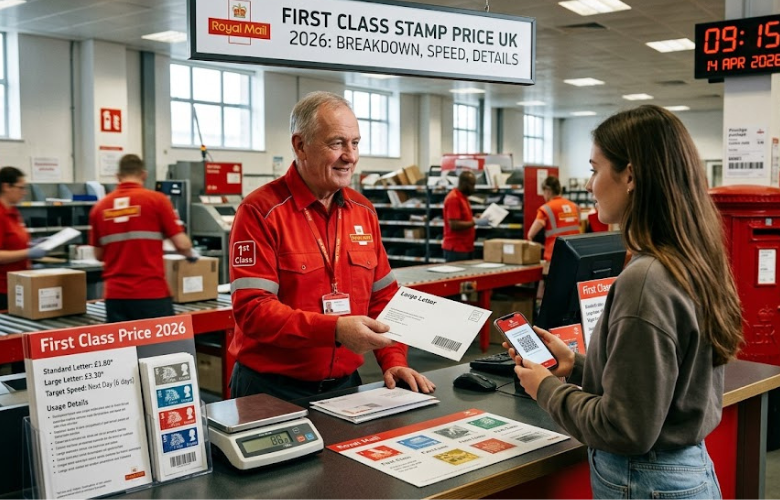
The first class stamp price in the UK is an important topic for anyone who still uses traditional postal services for sending letters, documents, or official mail. Even in a digital age, millions of people rely on Royal Mail for fast and reliable delivery across the country. The first class stamp reflects the cost of sending mail through the fastest standard service, which is designed to deliver letters quickly, usually within one working day. Understanding this price is useful for both personal and business users who want to manage postage costs effectively while ensuring timely communication.
What is First Class Stamp Price?
The first class stamp price refers to the amount charged by Royal Mail for sending a standard letter using its fastest regular delivery service within the United Kingdom. This service is designed to prioritize urgent mail and ensure quicker delivery compared to other postal options. It is commonly used for sending important documents, personal letters, business correspondence, and official notices where timing is critical.
This price covers the complete postal journey from start to finish. It includes the collection of mail from post boxes or post offices, transportation to sorting centres, automated and manual sorting processes, and final delivery to the recipient’s address. Because the service is prioritized within the postal network, it costs more than slower delivery options. However, many users continue to choose it because it provides a strong balance between cost and speed.
In everyday usage, people often prefer this service when they cannot afford delays. Whether it is a legal document, a job application, or an urgent personal message, the first class stamp price is seen as a practical investment for faster communication.
Current First Class Stamp Price in the UK
In 2026, the first class stamp price in the UK is approximately £1.80 for a standard letter weighing up to 100g. This pricing applies to most regular-sized envelopes, greeting cards, and small documents sent within the country. The price is regulated by Royal Mail and is subject to change depending on economic conditions and operational requirements.
Even though the cost has increased over the years, the service continues to be widely used. Many individuals and businesses still rely on it because it offers faster delivery compared to standard alternatives. For urgent communication, the slightly higher cost is often considered worthwhile because it ensures quicker processing within the postal system.
The first class stamp price also reflects ongoing investments in logistics, technology, and staffing required to maintain a nationwide delivery network. This ensures that mail reaches even remote areas efficiently, maintaining consistency in service quality across the UK.
Why First Class Stamp Price Changes Over Time
The first class stamp price does not remain constant because postal services are heavily influenced by economic and operational factors. Royal Mail operates one of the largest delivery networks in the UK, and maintaining this system requires continuous investment in infrastructure, vehicles, technology, and workforce.
One of the main reasons for price changes is inflation. As the cost of fuel, transport, and wages increases, the overall cost of delivering mail also rises. This naturally impacts postal pricing. Another major factor is the decline in physical mail volume. With more people using email and digital communication, fewer letters are being sent, which means the cost of maintaining the system is shared among fewer users.
Additionally, Royal Mail continuously upgrades its systems to improve efficiency. Automated sorting machines, digital tracking tools, and improved logistics systems all contribute to better service quality, but they also increase operational expenses. All these factors combined directly influence the first class stamp price over time.
Delivery Speed and Performance
The primary reason people choose first class mail is its delivery speed. The service is designed to deliver letters within one working day across most parts of the UK. In many cases, items arrive the next day, although this is not guaranteed due to external factors such as weather conditions, delivery volume, and location.
Despite these variables, first class mail remains the fastest standard postal service available. It is especially useful when timing is important and delays could create problems. Businesses often depend on it for urgent communication, while individuals use it for personal messages that need quick delivery.The reliability and speed associated with this service are key reasons why the first class stamp price continues to be widely accepted by users.
First Class vs Other Postal Services
Royal Mail provides several delivery options, each designed for different needs and budgets. Second class mail is the most affordable option but takes longer to deliver, usually between two and three working days. It is suitable for non-urgent communication where speed is not a priority.
Premium services, such as guaranteed next-day delivery, offer exact delivery times and higher security. However, these services come at a significantly higher cost and are generally used for critical or high-value items.The first class stamp price sits between these options, offering a balanced solution. It is faster than second class mail but more affordable than premium services, making it the most commonly used choice for everyday postal needs.
Importance of Physical Mail in Modern Communication
Even in a highly digital world, physical mail continues to play an important role in communication across the UK. Legal documents, contracts, government notices, and financial statements often require printed copies and official signatures. In such cases, postal services remain essential.
Businesses also rely heavily on postal communication for formal correspondence with clients, customers, and institutions. In rural areas where internet access may be limited or unreliable, traditional mail continues to serve as a key communication channel.
Because of this ongoing demand, the first class stamp price remains an important part of the UK’s communication system, ensuring that essential messages are delivered securely and efficiently.
When to Use First Class Mail
First class mail is best used when speed is important but guaranteed delivery is not required. It is commonly used for urgent letters, official notifications, invitations, and business documents that need to reach recipients quickly.
If timing is not critical, second class mail may be more cost-effective. However, when fast delivery is needed without paying premium charges, first class remains the preferred option for most users.
Key Benefits of First Class Service
The main advantage of first class mail is its combination of speed, reliability, and simplicity. It offers nationwide coverage and is easily accessible through post offices and online services. Users do not require special procedures, making it convenient for everyday use.
Another benefit is consistency. Despite occasional delays, the service generally performs well and remains trusted by millions of people across the UK. Even with changes in pricing, it continues to be one of the most dependable postal options available.
(FAQs)
1. What is the current first class stamp price in the UK?
The current first class stamp price in the UK is around £1.80 for a standard letter up to 100g. This applies to regular mail such as letters, postcards, and small documents sent through Royal Mail’s priority service. It is the most commonly used option for fast domestic delivery.
2. How fast is first class mail delivery?
First class mail is designed to arrive quickly, usually within one working day across most of the UK. However, delivery times can sometimes vary depending on location, weather conditions, and postal workload.
3. Why does the price of first class mail change?
The cost changes due to inflation, rising operational expenses, fuel costs, and reduced letter volumes. Royal Mail adjusts pricing to maintain service quality and support nationwide delivery infrastructure.
4. Is first class mail still worth using today?
Yes, many people still use it because it offers fast and reliable delivery for urgent letters and important documents. Despite digital communication, physical mail is still essential for formal and legal purposes.
5. What items can be sent using first class stamps?
You can send letters, greeting cards, invoices, and small documents. It is mainly used for standard-sized mail that does not require special handling or tracking.
6. What is the difference between first and second class mail?
First class mail is faster, usually arriving the next working day, while second class mail takes two to three days. Second class is cheaper but slower compared to first class service.
7. Can first class mail be tracked?
Standard mail sent using a first class stamp is not tracked. However, Royal Mail offers additional paid services if tracking or delivery confirmation is needed.
Conclusion
In conclusion, the first class stamp price remains an essential part of the UK postal system, even as digital communication continues to grow. It provides a reliable and fast way to send important letters, documents, and business correspondence across the country. Although prices have increased over time due to operational costs and economic factors, the service still offers strong value for urgent communication. The first class stamp continues to balance speed, convenience, and nationwide coverage, making it a trusted choice for millions of users. Overall, it remains a key service for both personal and professional postal needs in the UK.
