







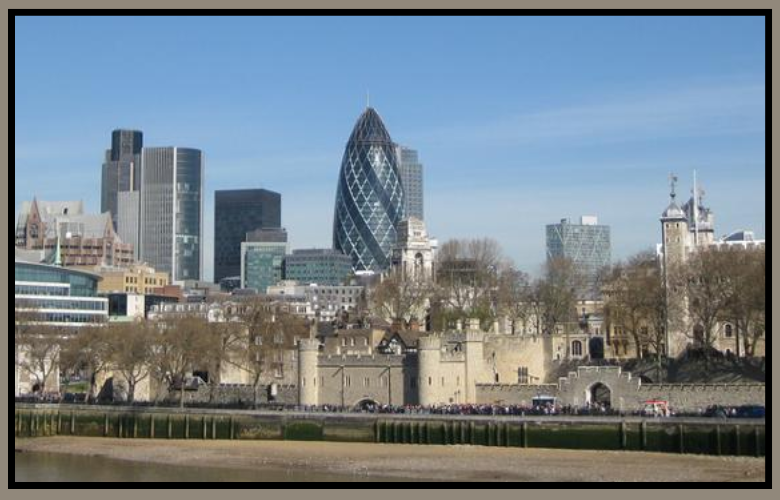
The Gherkin London is one of the most well-known architectural landmarks in the City of London. Its official name is 30 St Mary Axe, but it is more commonly referred to as The Gherkin due to its distinct appearance. It is a skyscraper whose curved design, geometric glass exterior and silhouette are well known. It was designed by the architectural firm Foster + Partners and became a prominent part of the London skyline since it was opened in 2004. With its height of about 180 meters, the Gherkin combines offices and hospitality functions as well as offers stunning city views. It has a lot to offer to tourists and architects alike.
30 St Mary Axe: Real Name, Location and Basic Facts
The official name of the building is 30 St Mary Axe, taken from its address in the City of London. The nickname “The Gherkin” became popular because the tower’s rounded and tapering shape resembles a gherkin. It was also previously known as the Swiss Re Building because of its association with Swiss Re, which occupied the tower as its London headquarters. Today, the official name and nickname are both widely recognised.
The building occupies a prominent position close to Leadenhall Market and other important City attractions. It stands approximately 180 metres tall and contains 41 floors, giving it a strong presence within London’s financial district. Its unusual shape makes it easy to identify among the surrounding buildings, even though several newer skyscrapers are now taller. The tower remains one of the most photographed pieces of modern architecture in the capital.
People searching for the Gherkin London Wikipedia information often want basic facts about its architecture, construction, height and opening. Foster + Partners designed the building, while Arup contributed major engineering expertise. Construction began in the early 2000s, the structure was completed in 2003 and it officially opened in 2004. Its architectural importance was recognised when it won the prestigious RIBA Stirling Prize in the same year.
The Gherkin London History and Development
The history of the site began long before the famous skyscraper appeared. The location was previously associated with the Baltic Exchange and the Chamber of Shipping, both important institutions in London’s commercial history. The Baltic Exchange occupied the site for many decades, but a bombing in 1992 caused significant damage to its historic building. The damaged structure could not simply return to its previous role, eventually leading to plans for redevelopment.
The redevelopment provided architects with an opportunity to create something very different from the traditional office towers found throughout financial districts. Foster + Partners developed a circular plan and an aerodynamic form that becomes wider towards the middle and gradually narrows towards the top. This unusual approach helped reduce the apparent bulk of the tower while giving it a memorable identity. The design also responded to the restricted urban environment surrounding the site.
Environmental performance was an important part of the original concept. The building incorporates natural light, ventilation strategies and internal atria to create a more efficient office environment. Its design demonstrates how environmental considerations can influence the shape and structure of a skyscraper rather than simply being added as separate features. This combination of architecture, engineering and sustainability helped establish the building as a significant example of contemporary London design.
Architecture, Design and Famous Photos
The architecture is one of the main reasons people search for the Gherkin photos. The building has a distinctive geometric façade made up of diamond-shaped sections that create a changing visual pattern across its surface. Reflections from the sky and nearby buildings make the glass appear different throughout the day. Depending on the viewpoint, the tower can look slender, rounded, wide or sharply tapered.
One particularly fascinating detail is that the apparently curved façade does not consist entirely of curved glass. Most of the exterior uses flat glass panels arranged around the geometric structure. The lens at the very top is the only piece of curved glass in the building. This clever engineering approach creates the appearance of a continuously curved surface without requiring the entire façade to be manufactured from curved glass.
The building is also interesting from a sustainability perspective. Its form, structural system and internal spaces were developed to support natural ventilation and make effective use of daylight. The tower’s circular floor plates create flexible office areas, while its external structure contributes to the distinctive appearance. For photographers, the combination of glass, steel, reflections and surrounding historic architecture makes the landmark particularly attractive from different viewpoints across the City.
Restaurant, Menu and Upper-Floor Bar Experience
The upper levels of the building contain hospitality spaces that allow visitors to experience the landmark from inside. Helix restaurant and Iris bar occupy floors near the summit and offer dining, drinks and impressive views across London. This makes the tower more than simply an office building because selected areas provide opportunities for visitors to enjoy its architecture and skyline setting.
People searching for the Gherkin London menu are usually interested in the complete dining experience rather than food alone. The restaurant combines contemporary British dining with a dramatic setting high above the City. It can be particularly appealing for celebrations, business meals and special occasions because guests can enjoy their meal while looking across London’s famous skyline. Menus and dining arrangements can change, so checking current information before visiting is advisable.
The phrase the Gherkin London rooftop bar is also frequently used when people search for drinks and skyline experiences. However, Iris is more accurately described as an upper-floor bar rather than a traditional open-air rooftop terrace. Its elevated location provides panoramic views from inside the building. The combination of architecture, atmosphere and city views makes the upper-floor hospitality experience one of the most interesting ways to appreciate this famous landmark.
Can You Go Inside and What Can Visitors See?
A common question is can you go to Gherkin London? The answer depends on the type of visit. The tower is primarily a private commercial office building, so it does not operate as a normal public observation deck. Visitors cannot generally walk into the building and freely travel to its highest floors without a suitable reason or booking.
However, selected hospitality experiences can provide public access. Restaurant and bar reservations offer opportunities to enter the building and experience parts of its upper levels. Special events may also occasionally provide additional access to areas that are normally unavailable to general visitors. Because access arrangements can change, anyone planning a visit should check the current conditions before travelling.
Even without entering, the surrounding streets provide excellent opportunities to appreciate the architecture. The City of London offers many viewpoints where visitors can photograph the distinctive glass façade against historic buildings and modern skyscrapers. A visit can easily be combined with a wider walking tour around the financial district, making it possible to see markets, churches, historic streets and other architectural landmarks nearby.
Why This Landmark Remains So Popular
The building remains popular because its design is instantly recognisable. London has gained several much taller skyscrapers, but the Gherkin’s unusual profile gives it a character that is difficult to confuse with anything else. Its rounded body, geometric glass façade and tapering summit have made it one of the defining images of modern London.
Its architectural importance also comes from the way design and environmental performance were combined. Natural daylight, ventilation and structural efficiency influenced the building’s development, demonstrating that a modern commercial tower could have both a strong visual identity and practical environmental features. Its design helped change expectations about what a London office skyscraper could look like.
The tower also represents the relationship between London’s historic past and modern future. The site has links to the Baltic Exchange, while the completed skyscraper became an international symbol of contemporary London. Its appearances in popular culture, photography and travel imagery have further increased its recognition. For visitors, the building offers an excellent example of how innovative architecture can become an important part of a city’s identity.
(FAQs)
What is the real name of the Gherkin?
The official name is 30 St Mary Axe, which comes from its address in the City of London. The nickname “The Gherkin” became popular because the building’s rounded and tapering shape resembles a gherkin.
Who designed the Gherkin?
The building was designed by Foster + Partners, with engineering expertise from Arup. Its aerodynamic shape, geometric glass façade and environmental features helped establish it as one of London’s most recognisable modern buildings.
How tall is the Gherkin?
The tower is approximately 180 metres tall and has 41 floors. Although several newer London skyscrapers are taller, its unusual architecture makes it one of the capital’s most recognisable landmarks.
Can you go inside the Gherkin London?
The building is mainly a private office development, so general public access is limited. However, visitors may be able to enter through restaurant, bar or special-event bookings, depending on current arrangements.
Is there a restaurant inside the building?
Yes. Helix is a restaurant located near the top of the tower. It offers a dining experience accompanied by panoramic views across London, making it particularly appealing for special occasions and visitors interested in the building.
Conclusion
The Gherkin continues to be one of the most iconic structures in London, being famous for its unique architecture, interesting history, and panoramic view of the city. It is the distinctive shape of the structure, the unusual glass façade, and the ingenious architectural solutions which have made it one of the easily recognizable buildings in the cityscape of London. Furthermore, the connection between the structure and the old Baltic Exchange makes the history of the building more interesting, and the restaurant and bar located on the upper floors make it possible for the visitor to explore the building from within.


