









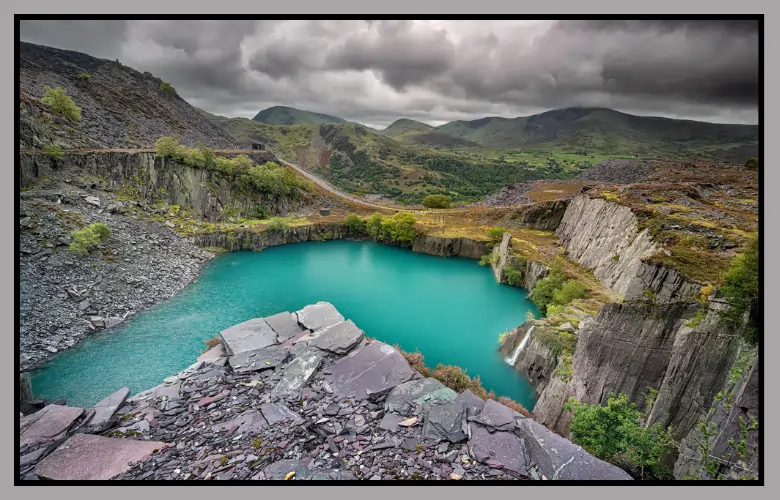
Dinorwic Quarry, located in North Wales, close to Llanberis, is one of the most recognized industrial heritage monuments in the United Kingdom. It was a popular quarry producing roof slates that had been functioning for almost two hundred years until it closed down. Currently, Dinorwic is a strikingly impressive deserted landscape that is formed by both humans and nature over time. Its huge terraces, rugged cliffs, and rich history are the main attractions of this site that reflect the industrial background of the country as well as its engineering achievements.
Historical Development and Industrial Growth
The site began development in the late 18th century and quickly expanded into one of the largest slate quarries in the world. At its peak, it employed over 3,000 workers and functioned like a fully developed industrial settlement built into the mountains. Entire terraces were carved into the rock to extract high-quality slate in large quantities.
The quarry grew rapidly during the Industrial Revolution when demand for durable roofing materials increased. Welsh slate became highly valued due to its strength, weather resistance, and long lifespan. The site played a major role in supplying this demand across the UK and beyond.
However, by the mid-20th century, demand declined as alternative roofing materials became popular. Rising production costs also made operations less sustainable. The quarry finally closed in 1969, leaving behind a vast industrial landscape that remains largely preserved today.
Engineering Innovation and Industrial Structure
One of the most remarkable aspects of Dinorwic Quarry is its advanced engineering system. The site was designed to operate efficiently despite its steep mountain location, using innovative methods for its time.
The quarry used a complex internal transport network instead of traditional roads. Narrow-gauge railways, incline planes, and gravity systems were used to move slate between levels. This allowed workers to handle large-scale production in a challenging environment.
Key engineering features include:
- Narrow-gauge railway systems for internal transport
- Multi-level slate terraces carved into rock
- Hydraulic machinery for cutting and lifting stone
- Incline planes for moving materials between levels
- Underground tunnels connecting workshops and quarry zones
These systems demonstrate how industrial innovation adapted to extreme natural landscapes, making this quarry a key example of early engineering achievement.
Benefits and Importance of the Site
The site holds significant historical, educational, and cultural value. It is not just an abandoned industrial area but an important record of Wales’ industrial past. One of its key benefits is its educational importance. Students and researchers study it to understand industrial engineering, geology, and historical labour systems.
It also plays a role in preserving Welsh heritage, helping future generations understand how the slate industry shaped local communities and economies. In addition, the site supports tourism, attracting visitors who contribute to the regional economy.
Key benefits include:
- Strong historical and cultural preservation value
- Educational resource for engineering and geology
- Insight into industrial and labour history
- Contribution to local tourism and economy
- Unique example of landscape transformation
This combination of value makes it an important landmark in both Welsh and British history.
Modern Uses and Visitor Activities
Although no longer active, the quarry continues to serve several modern purposes. One of the most popular is rock climbing. The steep slate cliffs provide challenging routes that attract climbers from around the world. This makes the site well-known in the global climbing community.
The area is also widely used for photography and filming due to its dramatic scenery. The combination of industrial ruins and natural mountain landscapes creates a visually powerful setting. Many film productions and documentaries have used the site for its unique atmosphere.
It is also an important location for education and research. Universities and geology students visit to study rock formations, industrial structures, and environmental change.
Modern activities include:
- Rock climbing and outdoor adventure
- Photography and film production
- Educational field trips and research
- Historical exploration of industrial ruins
- Walking and landscape appreciation
These uses show how the quarry remains relevant long after its closure.
Why Visitors Are Drawn to This Location
People visit this site for many different reasons, but most are drawn by its unique combination of history and landscape. History enthusiasts come to explore one of the largest slate systems ever built. Adventure seekers are attracted to climbing opportunities and rugged terrain.
Photographers are especially interested due to its dramatic lighting and textures, which change throughout the day. Many visitors also come simply to experience its atmosphere, which feels both powerful and peaceful.
The quarry offers a rare sense of scale that is difficult to find elsewhere. Its vast terraces and silent structures create a strong emotional impact on visitors.
Main reasons for visiting:
- Interest in Welsh industrial history
- Adventure sports and climbing
- Photography and creative inspiration
- Educational and research exploration
- Unique atmospheric landscape experience
This diversity of appeal makes it one of the most fascinating sites in North Wales.
Is It Worth Visiting?
This quarry is definitely worth visiting for anyone interested in history, landscapes, or outdoor exploration. It offers a rare chance to experience a real industrial site that has not been heavily developed for tourism. This creates a more authentic and immersive experience compared to modern attractions.
Visitors should be aware that it is a rugged and open landscape rather than a controlled tourist site. However, this rawness is part of its appeal. It allows people to connect directly with Wales’ industrial past in a powerful and memorable way.
Overall, it remains one of the most unique destinations in North Wales, offering a blend of history, nature, and adventure.
(FAQs)
1. What is Dinorwic Quarry famous for?
It is famous for being one of the largest slate quarries in the world and for its dramatic stepped landscape in North Wales. It played a major role in supplying roofing slate across Britain and beyond during the 18th and 19th centuries.
2. Where is it located?
It is located near Llanberis in Gwynedd, North Wales, close to the Snowdonia (Eryri) National Park area, making it easy to combine with other nearby attractions.
3. Why was it closed?
The quarry closed in 1969 mainly due to reduced demand for slate, rising production costs, and competition from alternative roofing materials that became more popular after World War II.
4. Can you visit it today?
Yes, visitors can explore many parts of the site. However, it is an open and rugged landscape, so some areas may be unsafe or restricted, and caution is always recommended.
5. Is it good for photography?
Yes, it is extremely popular for photography due to its vast terraces, industrial ruins, and dramatic mountain surroundings, which create unique lighting and textures throughout the day.
Conclusion
The Dinorwic Quarry is one of the most impressive sites associated with industries in Wales. Through its history from becoming an internationally known supplier of slates to the shutting down operations in 1969, there is much that can be learned about the history of Wales. This quarry is one of those places which attract people who like history, photography, climbing and unique places. The huge terraces of this quarry are something really interesting for the visitors. Even today, when this quarry stopped working, it has its own historical value.


